The AI Grid Bottleneck
Data-centre demand is doubling by 2030. The question isn't whether AI scales — it's who pays to upgrade the network underneath it.
By Max Fischer ·
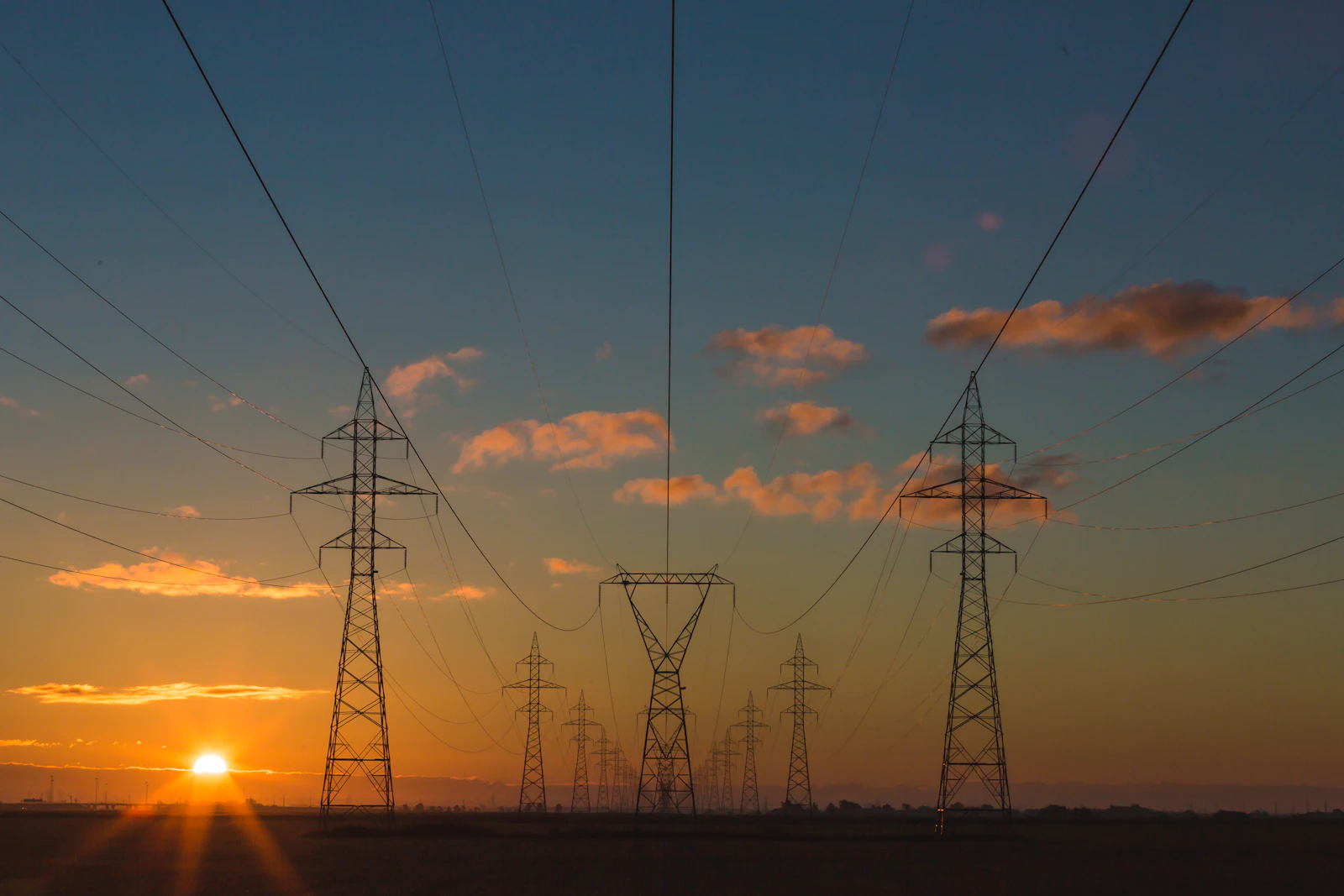
Artificial intelligence development has collided with a constraint that few technology strategists anticipated a decade ago: the electric grid. Large language models and the data centres that train them consume electricity at a scale that now rivals entire industrial sectors. The International Energy Agency estimates that global data-centre electricity demand could more than double by the end of the decade, rising from roughly 415 terawatt-hours to around 945 terawatt-hours. That increment alone exceeds the total annual consumption of many industrialised economies. The critical question is no longer whether artificial intelligence can scale computationally, but whether the grid infrastructure can accommodate the spatial concentration and temporal volatility of its power demand.
The practical bottleneck appears first at the substation and interconnection level. Utilities across developed markets report queues of several years for new industrial loads seeking connection approval. A data-centre developer applying today for a hundred-megawatt supply may wait thirty-six months or longer for impact studies, equipment procurement, and transformer upgrades—delays that compound the uncertainty of capital deployment. The grid was designed for distributed residential and commercial load, not for single-point facilities drawing the equivalent of a small city. High-density artificial intelligence clusters can exceed twenty kilowatts per server rack, an order of magnitude above traditional enterprise computing, creating thermal and electrical challenges that require substation reconfiguration, feeder reinforcement, and in some jurisdictions entirely new transmission spurs. The result is a mismatch between the pace of digital innovation and the cadence of utility planning cycles, which remain anchored to ten- and fifteen-year capital frameworks.
Operators are responding with on-site generation and storage as parallel strategies. Natural gas turbines and battery arrays allow new facilities to bypass or defer grid interconnection, though at the expense of emissions profiles and operating cost. Some hyperscale providers have begun exploring small modular nuclear reactors, a technology still in the licensing pipeline but attractive for its continuous baseload output and limited land footprint. Others are negotiating direct power-purchase agreements with renewable generators, pairing wind or solar farms with purpose-built transmission links that circumvent the public network. These arrangements shift infrastructure risk from the utility to the developer, but they also fragment the electricity system into semi-private networks, raising questions about cost socialisation and system resilience. When private capital funds dedicated substations and lines, who bears the stranded cost if the facility closes or demand patterns shift?
The thermal challenge deserves separate attention. Air cooling, the industry standard for decades, becomes impractical at the power densities artificial intelligence now demands. Liquid cooling—either direct-to-chip or immersion—can remove heat more efficiently, but it requires specialised plumbing, filtration, and materials handling that most existing buildings lack. Retrofitting older data centres is often uneconomic; new construction dominates. This pivot has consequences for real estate markets, water supply in arid regions where evaporative cooling is common, and the skill base of the technician workforce. It also concentrates risk: a cooling system failure in a high-density hall can force an emergency shutdown in minutes, not hours, amplifying the operational premium on redundancy.
Demand flexibility offers a partial solution. Artificial intelligence training workloads, unlike latency-sensitive inference queries, can tolerate interruption and can be scheduled to coincide with periods of low grid stress or high renewable output. Some utilities are piloting tariffs that reward load curtailment during peak hours, effectively turning data centres into dispatchable demand resources. The challenge lies in aligning commercial incentives: training runs represent significant sunk compute cost, and delaying them has competitive implications. Flexible computing requires both technical orchestration—workload migration across geographies, dynamic provisioning—and contractual innovation, such as interruptible service agreements that offer discounted rates in exchange for curtailment rights. The grid benefits, but only if participants accept operational constraints that conflict with the velocity culture of technology development.
The planning choices made now will shape decades of outcomes. Policymakers face a trade-off between accommodating concentrated demand through targeted grid investment and enforcing dispersal through siting policy or load caps. The former risks over-building infrastructure that may be underutilised if artificial intelligence growth plateaus; the latter risks slowing innovation by forcing suboptimal facility locations. The broader public interest lies in ensuring that grid upgrades are funded transparently, that externalities such as emissions and water use are priced accurately, and that the resulting infrastructure serves resilience goals beyond any single technology cycle. The most productive question for executives, regulators, and investors is not whether artificial intelligence will find power, but whether the path to that power leaves the grid stronger or more brittle when the next demand shock arrives.